
Electronic Arts (EA) has reported its final set of quarterly results as a publicly traded company, and they’re positive. This comes as EA transitioned to private ownership after its much-anticipated $55 billion buyout by a group of investors led by Saudi Arabia’s sovereign wealth fund.
The deal officially closed on Aug. 4, 2026, marking the end of EA’s time as a public company. The deal has faced criticism even though it’s been approved. Lawmakers are concerned about foreign investment and ownership.
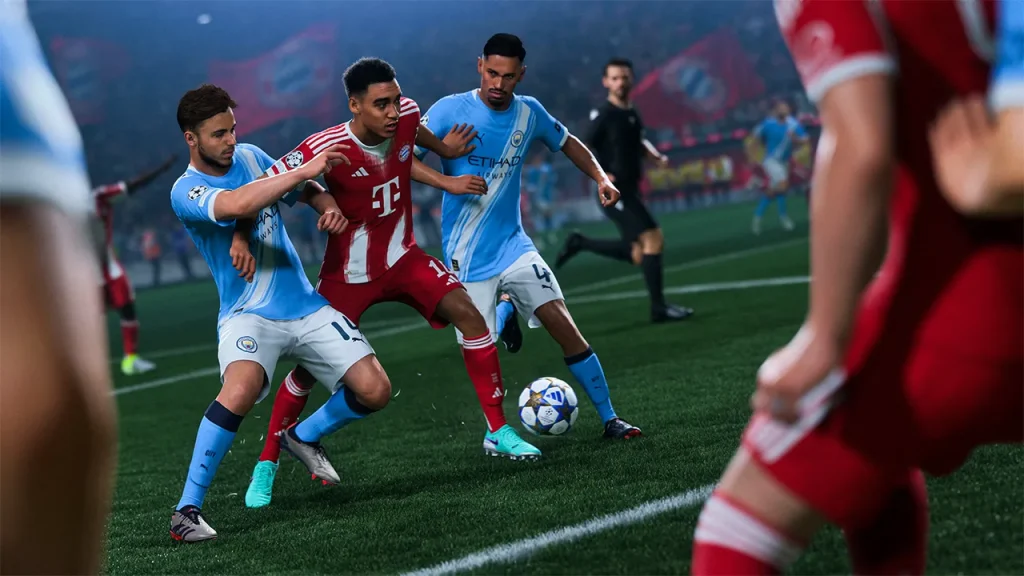
A gameplay screenshot from EA Sports FC 26. This highlights the realistic player animations and competitive match action that helped drive EA’s live service revenue growth.
EA Reports Quarterly Revenue Close to $2 Billion.
In its latest financial report, EA announced net revenue of $1.98 billion for the first quarter of fiscal 2026. This is up 19% year over year.
Operating income also saw a considerable jump, with an 89% YoY increase to $513M.
Much of this success came from EA’s growing library of games. These games are based on continued player engagement rather than one-time purchases.
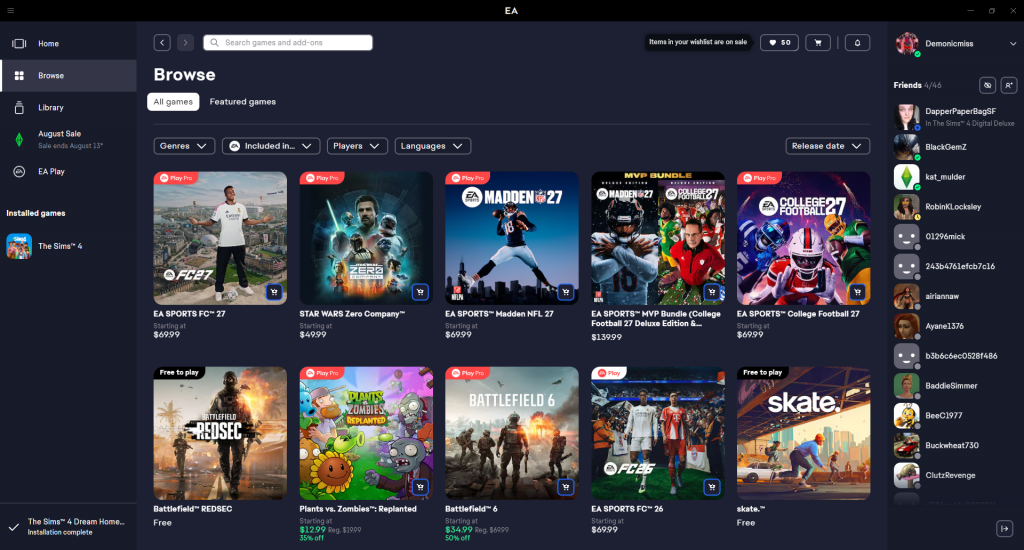
The EA App storefront highlights the publisher’s expanding lineup of digital games, including EA Sports FC 27, Battlefield 6, Madden NFL 27, and College Football 27.
Live Service Games Still EA’s Biggest Revenue Driver
Live services remained a significant driver of EA’s financial performance, generating $1.47 billion of revenue during the quarter, up 7% year-over-year.
The company attributed much of this growth to incremental content sales and continued engagement in key franchises, including:
- Battlefield VI
- EA Sports FC
- Apex Legends
- Madden NFL
- EA Sports NCAA Football
Live service games are now a key part of EA’s business model, with recurring purchases, like expansions, cosmetic items, seasonal content, and other digital additions, providing a steady stream of revenue long after a game’s initial launch.

Battlefield 6 game cover art
Digital Sales Outsell Physical Copies
The EA report also highlighted the continuing shift from physical game releases to digital purchases.
For the quarter, full-game revenue was $514 million, $438 million of which was digital.
EA says that digital purchases have been the majority of its full-game sales for several years. Based on total units sold on Xbox and PlayStation platforms:
- Digital units sold in FY 2026: 81%
- 78% of FY25 units are digital
- Digital units sold in fiscal year 2024 were 73%
Digital distribution, the company said, increases profit margins because publishers don’t have to contend with many of the costs of making, shipping, and retail distribution of physical copies.
The growth of digital sales is also indicative of a broader trend in the industry, as the big platform holders move more and more to digital-first approaches.
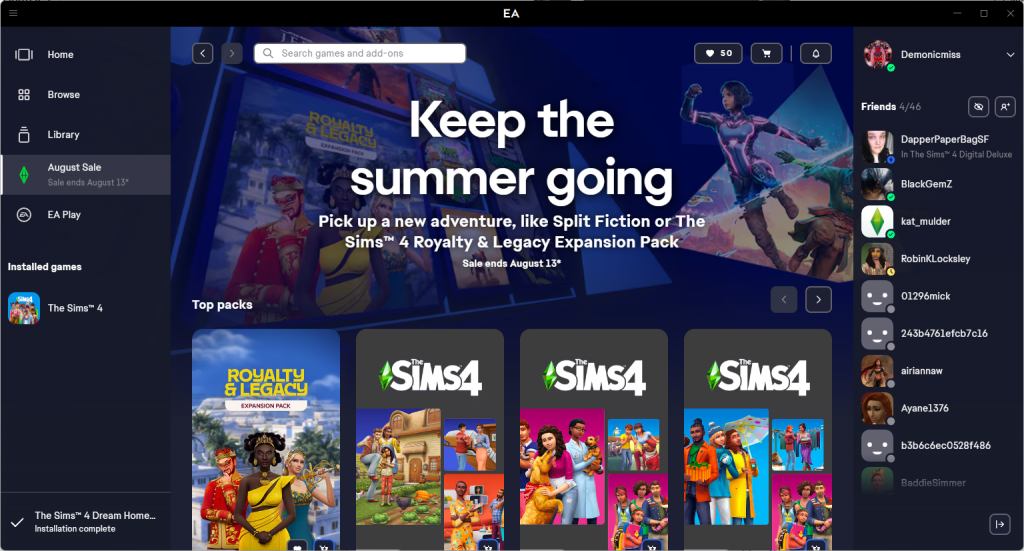
EA Summer Sale
Success Comes With Continued Layoffs
Even with the good financial results, EA’s growth hasn’t spared the company from job cuts.
The company has continued its restructuring efforts, which have included layoffs of teams like Full Circle, the studio behind Skate, and parts of the Battlefield development division.
Publishers are reporting record revenues, but the gaming industry has seen widespread layoffs recently. Companies are citing restructuring, changing market conditions, and shifts in development strategies.
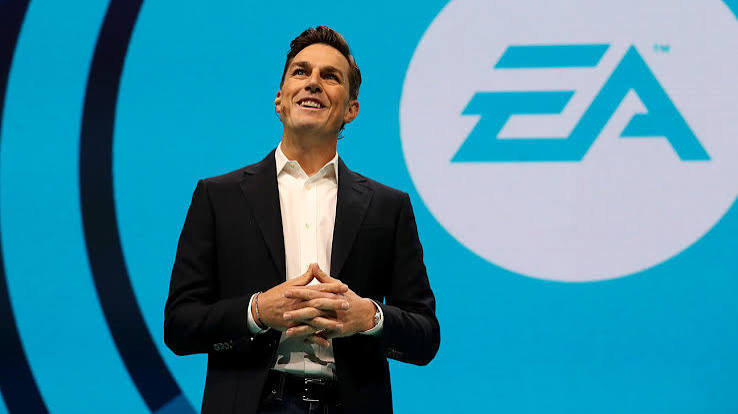
EA Ceo Andrew Wilson speaking at an event
CEO Pay Draws Attention
EA CEO Andrew Wilson’s pay package was $38.6 million in salary, bonuses, and stock awards after a year of strong franchise performance.
The compensation was linked to EA’s financial performance, franchise growth, and the company’s use of generative artificial intelligence tools in its development processes.
EA is increasingly using artificial intelligence technology in its workflows to increase production efficiency and speed up development pipelines.

Andrew Wilson, Electronic Arts Chairman and CEO.
What private ownership means for EA’s future
Now that the EA Buyout deal has closed, EA is a private company and no longer publicly traded. The move would be one of the biggest take-private deals in gaming history and could change how the publisher handles future investments, acquisitions, and game development.
EA’s financial results reflect a reality for gamers mirrored across the industry: live service games, digital sales, and recurring player spending are now the core of the modern gaming business.

Electronic Arts’ acquisition by Saudi Arabia’s Public Investment Fund, Affinity Partners, and Silver Lake marks a new chapter for the gaming giant. At the same time, its esports legacy continues through major competitions like Apex Legends Global Series and EA Sports FC events.
The question after the EA buyout is complete is whether private ownership can help the company grow its biggest franchises or whether players will see more changes in how EA develops and monetizes its games.
Sources Form 10-Q , Form 10-K/A, and Game Developer
